Ever noticed how some phrases just sound good when you say them out loud? Like “pitter patter” or “blank and think”? That smooth, rhythmic feel isn’t random it’s often thanks to consonance.
Understanding consonance meaning isn’t just for poets or literature students anymore. In 2026, it shows up everywhere from song lyrics and brand slogans to social media captions and even memes. Once you recognize it, you’ll start spotting it everywhere.
In this guide, you’ll learn exactly what consonance means, how it works, how to use it correctly, and how it compares to similar devices like alliteration.
Whether you’re a student, writer, or just curious, this breakdown keeps things simple, practical, and actually useful.
Updated for 2026 with modern examples and real-world usage.
What Does “Consonance” Mean?
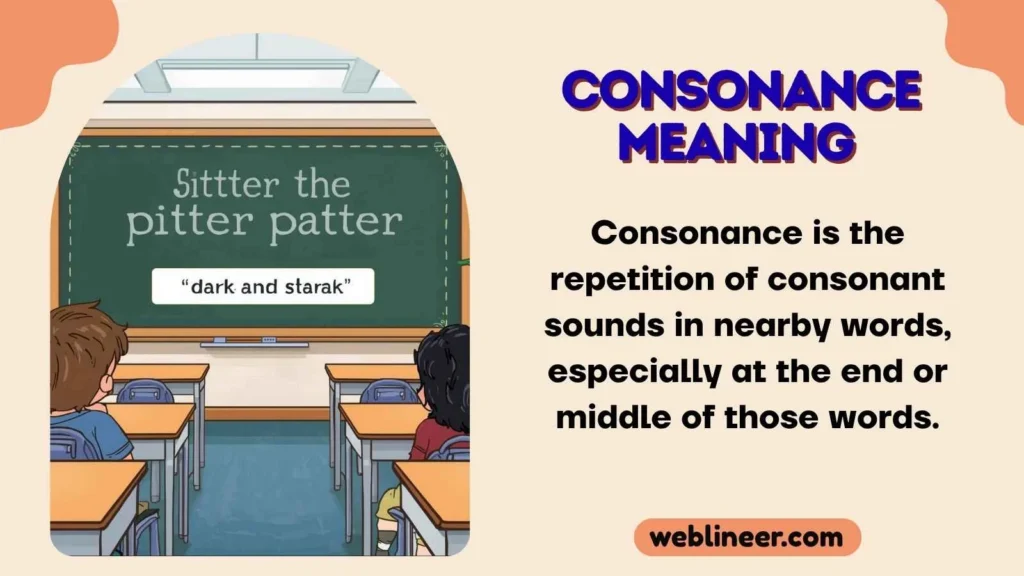
Consonance is the repetition of consonant sounds in nearby words, especially at the end or middle of those words.
Quick Answer:
Consonance is when consonant sounds repeat in close words to create rhythm and flow, like “pitter patter” or “blank and think.”
Origin of the Term
The word comes from the Latin consonare, meaning “to sound together.” It entered English literary discussions centuries ago but remains widely used today in both classic and modern writing.
How It Evolved
Originally used mainly in poetry and rhetoric, consonance now appears in:
- Song lyrics
- Advertising slogans
- Everyday speech
- Social media captions
Pronunciation Guide
Consonance → KON-suh-nuhns
How to Use “Consonance” Correctly in Texts & Writing
Consonance isn’t slang—it’s a literary tool. But it’s surprisingly flexible.
Where It Works Best
- Poetry and creative writing
- Songwriting and rap lyrics
- Branding and slogans
- Storytelling and speeches
Tone & Context
Consonance creates:
- Rhythm
- Emphasis
- A pleasing sound
It can feel:
- Playful (“tick-tock”)
- Dramatic (“dark and stark”)
- Smooth (“blank and think”)
Platform-Specific Use
- Instagram captions: Catchy phrases using repeating sounds
- Twitter/X: Punchy lines that stick
- WhatsApp: Casual phrases or jokes
- Discord/Reddit: Creative usernames or inside jokes
When NOT to Use It
- Formal academic writing (unless analyzing literature)
- Professional emails
- Legal or technical documents
Formatting Tips
- No need for capitalization rules
- Works naturally—don’t force it
- Often paired with rhythm or rhyme
Real Conversation Examples Using Consonance
1. Between Friends
A: “I hear that pitter patter outside.”
B: “Yeah, it’s raining again.”
👉 The repeated “t” sound creates a soft, rhythmic feel.
2. In a Group Chat
User1: “That movie was dark and stark.”
User2: “Perfect description honestly.”
👉 “Dark” and “stark” repeat the “rk” sound, adding emphasis.
3. Dating Chat
A: “You’ve got that calm, warm vibe.”
B: “Haha, I’ll take that.”
👉 “Calm” and “warm” share consonant sounds, making it sound smooth and flattering.
4. Gaming Context
Player1: “Quick click, don’t miss!”
Player2: “Got it!”
👉 The repeated “ck” sound adds urgency and rhythm.
5. Family Conversation
Parent: “Stop that flip-flop noise!”
Child: “Sorry!”
👉 Repeating consonant sounds make the phrase more expressive and memorable.
Common Mistakes & Misunderstandings
1. Confusing Consonance with Alliteration
- Alliteration: same starting sounds (“big blue ball”)
- Consonance: repeated sounds anywhere (“blank and think”)
👉 This is the most common mix-up.
2. Overusing It
Too much consonance can sound forced or unnatural. Good writing feels effortless.
3. Ignoring Sound vs Spelling
Consonance is about sound, not letters.
Example:
“Cat” and “kite” don’t count—they sound different despite both using “k.”
Generational Differences
- Younger users recognize it in music and memes
- Older generations may know it from poetry
Consonance Across Different Platforms & Demographics
Gen Z
Uses consonance naturally in:
- TikTok captions
- Song-inspired phrases
- Aesthetic text posts
Millennials
Often use it in:
- Branding
- Humor
- Creative writing
Older Generations
More familiar through:
- Poetry
- Literature
- Formal education
Is It Formal or Informal?
- Formal: When analyzing literature
- Informal: In everyday speech and creative expression
Trending Usage
Short, catchy phrases with consonance often go viral because they:
- Sound satisfying
- Are easy to remember
- Feel rhythmic
Related Slang, Abbreviations & Alternatives
Here’s how consonance compares to similar concepts:
| Term | Meaning |
|---|---|
| Alliteration | Repetition of consonant sounds at the start |
| Assonance | Repetition of vowel sounds |
| Rhyme | Matching ending sounds |
| Rhythm | Pattern of sounds and beats |
| Onomatopoeia | Words that imitate sounds |
| Repetition | Reusing words or sounds |
| Parallelism | Similar sentence structure |
| Meter | Structured rhythm in poetry |
👉 Learn more about assonance vs consonance for deeper understanding.
👉 Explore alliteration examples to compare patterns.
FAQs
What is consonance in simple words?
Consonance is when similar consonant sounds repeat in nearby words. It makes phrases sound smoother and more musical, which helps them stick in your mind.
What are 3 examples of consonance?
Examples include:
- “Pitter patter”
- “Blank and think”
- “Dark and stark”
Each repeats consonant sounds to create rhythm and emphasis.
Is consonance the same as rhyme?
Not exactly. Rhyme repeats full ending sounds, while consonance only repeats consonant sounds, often partially.
Why is consonance important in writing?
It improves flow, adds emotion, and makes content more engaging. Writers use it to create mood and make phrases memorable.
Can consonance be used in everyday speech?
Yes, people use it naturally in phrases, jokes, and expressions without even realizing it.
Conclusion
Consonance is one of those subtle tools that quietly makes language more powerful. Once you understand the consonance meaning, you start noticing it everywhere from poetry to pop culture.
It’s simple at its core: repeating consonant sounds to create rhythm and flow. But the impact? Huge. It can make writing more emotional, more memorable, and just more fun to read.
If you want to level up your writing, start experimenting with consonance in small ways. Try it in captions, messages, or even casual conversations.
Now your turn: What’s your favorite example of consonance? Drop it below—or explore more slang and language guides to keep sharpening your communication skills.

Hi, I’m Candy Rox, the voice behind Weblineer.com, where words get decoded and meanings finally make sense.
I’ve always been fascinated by how a single word can carry different vibes depending on where and how it’s used. From trending slang to everyday phrases, I break things down in a way that’s simple, clear, and actually useful in real conversations.