You might have seen the word vassal in a history book, a fantasy movie, or even a political debate and wondered, “Wait… what exactly does that mean?” You’re not alone.
The vassal meaning comes straight from medieval times, but the word still pops up in modern conversations, especially when talking about power, loyalty, and dependence.
Think knights, castles, and kings—but also think modern geopolitics, corporate hierarchies, and even video games. The term has evolved far beyond its original context.
In this updated-for-2026 guide, you’ll learn:
- The clear definition of vassal meaning
- Where the word came from
- How it’s used today (literally and metaphorically)
- Real-life examples and common mistakes
- Related terms and modern alternatives
Whether you’re a student, writer, gamer, or just curious about language, this guide will give you a complete understanding—without the boring textbook vibe.
What Does “Vassal” Mean?
Definition:
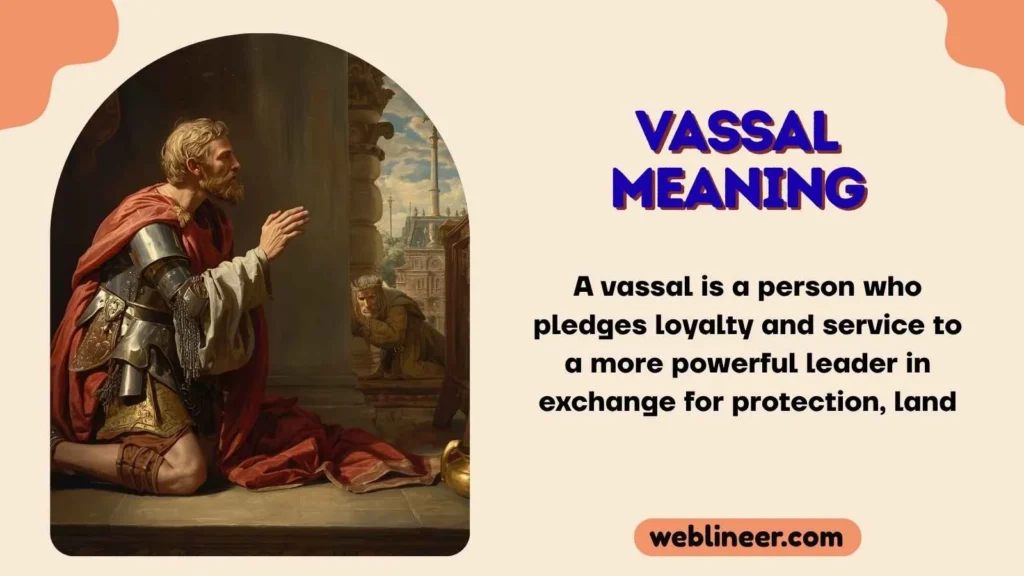
A vassal is a person who pledges loyalty and service to a more powerful leader in exchange for protection, land, or benefits.
Pronunciation:
VAS-uhl
/ˈvæsəl/
Origin of the Word
The word vassal dates back to medieval Europe during the feudal system. It comes from the Latin word vassus, meaning servant or retainer. Over time, it became a key term in feudal societies between roughly the 9th and 15th centuries.
In that era:
- A lord owned land
- A vassal managed that land
- In return, the vassal provided loyalty and military support
How the Meaning Evolved
Originally:
A formal legal relationship between nobles.
Today:
A broader term describing dependency or subordination.
For example:
- A small country dependent on a powerful nation
- A company heavily controlled by a parent corporation
- A fictional character serving a king
Quick Answer:
A vassal is someone who serves a more powerful person or authority in exchange for protection, benefits, or resources—historically through land and loyalty, and today often used metaphorically to describe dependence.
How to Use “Vassal” Correctly in Texts & Conversation
The word vassal is not internet slang, but it still appears in modern communication—especially in academic, political, historical, and gaming contexts.
Tone and Context
Common tones:
- Historical
- Formal
- Political
- Dramatic
- Literary
Less common in casual texting, but still used metaphorically.
Example tone:
Serious or analytical rather than playful.
Platform-Specific Usage
SMS / WhatsApp
Used in discussions about history, politics, or strategy games.
Example:
“That kingdom became a vassal after losing the war.”
Discord / Gaming Chats
Very common in strategy or fantasy games.
Example:
“Make them a vassal instead of destroying them.”
Social Media (X, Reddit, Instagram)
Often used metaphorically.
Example:
“That company is basically a vassal of its parent brand.”
When to Use It
Use vassal when describing:
- Loyalty to authority
- Political dependency
- Historical relationships
- Power hierarchies
When NOT to Use It
Avoid using vassal in:
- Casual jokes
- Everyday texting
- Friendly conversations
- Informal workplace chats
It can sound overly formal or dramatic.
Formatting Tips
- Usually lowercase: vassal
- Capitalize only at sentence start
- No abbreviation
- Rarely paired with emojis
Real Conversation Examples Using “Vassal”
Between Friends (History Discussion)
Aisha: Who controlled the land back then?
Bilal: The king did, but local nobles were his vassals.
Meaning:
Shows a historical relationship of loyalty and land ownership.
In a Classroom
Teacher: What happened after the treaty?
Student: The smaller kingdom became a vassal state.
Meaning:
Indicates political dependence.
In a Gaming Chat
Player 1: Should we destroy them?
Player 2: No, make them our vassal instead.
Meaning:
Strategic control without total conquest.
In a Workplace Discussion
Manager: That startup operates like a vassal to the parent company.
Meaning:
Metaphorical dependence in business.
In a Political Debate
Speaker: The nation risks becoming a vassal of foreign powers.
Meaning:
Warning about loss of independence.
Common Mistakes & Misunderstandings
1. Thinking a Vassal Is Just a Servant
Not true.
A vassal often had:
- Land
- Wealth
- Authority
- Military power
They were more like partners than servants.
2. Using It as an Insult
Calling someone a “vassal” can sound harsh or dramatic.
Example mistake:
“You’re just his vassal.”
Better:
“You’re dependent on him.”
3. Confusing Vassal With Slave
A vassal:
- Had rights
- Chose loyalty
- Could own property
A slave:
- Had no freedom
- No legal rights
Very different roles.
Generational Differences
Younger audiences often encounter the word through:
- Video games
- Fantasy movies
- Online strategy communities
Older audiences usually know it from:
- History education
- Political discussions
“Vassal” Across Different Platforms & Demographics
Gen Z
Most exposure comes from:
- Strategy games
- Fantasy content
- Historical memes
Usage frequency:
Moderate in niche communities.
Millennials
Common in:
- Gaming
- Online forums
- Political commentary
Older Generations
Primarily used in:
- Academic contexts
- Historical discussions
- News analysis
Is It Safe for Work?
Yes.
The word vassal is:
- Professional
- Neutral
- Non-offensive
But it can sound dramatic if used casually.
Viral or Trending Usage
The term periodically trends during:
- Historical TV shows
- Strategy game releases
- Geopolitical debates
Especially when discussing:
- International influence
- Political dependence
Related Terms, Synonyms & Alternatives
| Term | Meaning |
|---|---|
| Feudalism | Medieval system of land and loyalty |
| Liege | A lord or sovereign |
| Serf | Agricultural worker bound to land |
| Subordinate | Lower-ranking person |
| Dependent | Relying on another |
| Ally | Cooperative partner |
| Protectorate | State protected by another nation |
| Client state | Politically dependent country |
| Tributary | State paying tribute |
| Subject | Person under authority |
FAQs
What does vassal meaning in history?
In history, a vassal was a person who received land from a lord in exchange for loyalty, military service, and support. This relationship formed the backbone of the medieval feudal system.
What is a vassal state?
A vassal state is a country that depends on a stronger nation for protection or political support while maintaining limited self-rule. It is not fully independent.
Is vassal a negative word?
Not inherently. Historically, it was a neutral term describing a legal relationship. However, in modern contexts, calling someone a vassal can imply weakness or lack of independence.
How do you pronounce vassal?
The correct pronunciation is:
VAS-uhl
/ˈvæsəl/
The emphasis is on the first syllable.
Is the word vassal still used today?
Yes. The term is still used in:
- History
- Politics
- Gaming
- Business analysis
- International relations
It often appears metaphorically rather than literally.
Conclusion
The vassal meaning started in medieval castles and battlefields, but the concept still matters today. It describes loyalty, dependence, and power relationships whether between kings and knights or nations and corporations.
Understanding this word helps you read history more clearly, follow political discussions more confidently, and navigate complex power dynamics in modern conversations.
Language evolves, but some words stick around because they explain human relationships perfectly. Vassal is one of them.
Curious about more terms like this?
Explore related language guides and expand your vocabulary—you’ll sound sharper instantly.

Hi, I’m Smith Roy, the writer of Weblineer.com, where I break down words, slang, and meanings into something you can actually understand without overthinking it.
I’ve always been curious about how language works, how a simple word can carry different meanings depending on context, culture, or even a trending moment online. That curiosity turned into Weblineer, a space where I simplify complex terms, decode internet slang, and explain meanings in a way that feels natural, clear, and useful.