You arrive at the beach. The sun is shining, the water looks inviting and then you notice a colored flag fluttering near the lifeguard tower. Green? Yellow? Red?
Suddenly, a simple swim turns into a question of safety.
Understanding beach flags meaning is one of the most important things you can learn before entering the ocean. These flags are not decoration. They are quick, visual warnings designed to prevent injuries, rescues, and even fatalities.
The truth is, many people ignore them or worse, misunderstand them.
Whether you’re a tourist, parent, student, or casual swimmer, knowing what each flag means can literally save lives. In this guide, you’ll learn:
- What each beach flag color means
- When it’s safe to swim
- Common mistakes people make
- How flag systems vary by location
- Real-world safety scenarios
Let’s decode the colors and make your next beach day safer.
What Does “Beach Flags Meaning” Mean?
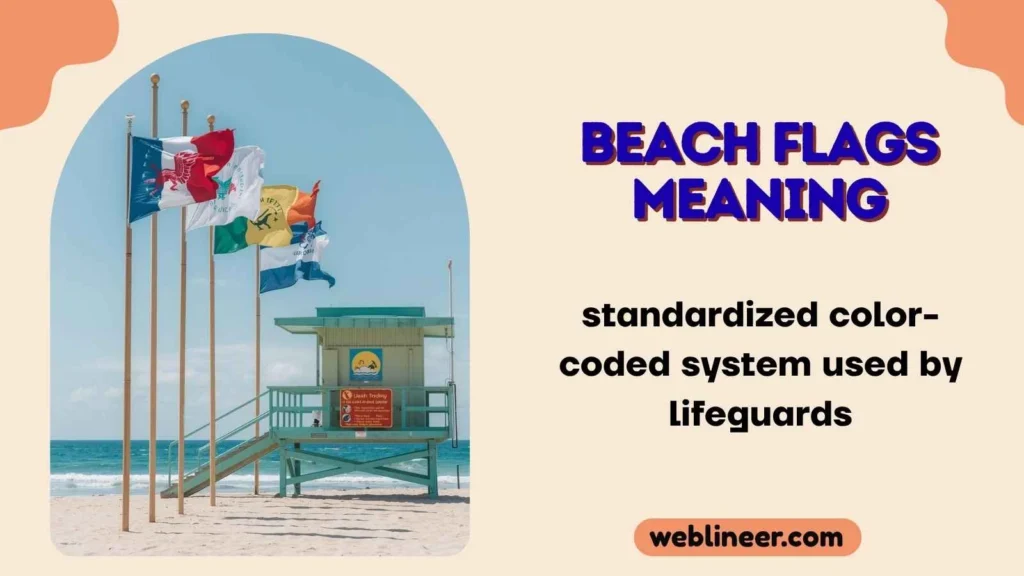
Beach flags meaning refers to a standardized color-coded system used by lifeguards to communicate ocean safety conditions to swimmers and beachgoers.
These flags provide instant warnings about hazards like:
- Strong currents
- Rough waves
- Dangerous marine life
- Storm conditions
- Restricted swimming areas
The system became widely adopted in the 20th century as coastal tourism increased and lifeguards needed fast, universal signals that worked across language barriers.
Today, beach flag systems are used in countries worldwide, including:
- United States
- Australia
- United Kingdom
- Spain
- United Arab Emirates
- Pakistan coastal regions
Pronunciation Guide
Beach Flags Meaning
/ beech flags mee-ning /
Quick Answer Box
Beach flags meaning is the color-coded warning system used at beaches to show swimming safety conditions. Green means safe, yellow means caution, red means danger, and double red means no swimming.
How to Use Beach Flags Correctly at the Beach
Think of beach flags like traffic lights but for the ocean.
They help you make fast decisions without reading long instructions.
Typical Flag Placement
You’ll usually find flags:
- Near lifeguard towers
- At beach entrances
- Along the shoreline
- Near designated swimming zones
Always look for them before entering the water.
General Safety Rule
Always swim between the flags.
This area is:
- Monitored by lifeguards
- Checked for hazards
- Considered the safest zone
When to Pay Extra Attention
Watch flags carefully if:
- Waves are large
- Weather is changing
- You are with children
- You are not a strong swimmer
- You see few people in the water
These situations increase risk.
Beach Flag Colors and Their Meanings
Here are the most widely recognized beach safety flags.
🟢 Green Flag Low Risk
Meaning:
Safe swimming conditions with minimal hazards.
Typical Conditions:
- Calm waves
- Weak currents
- Good visibility
What to Do:
You can swim normally but still stay alert.
No ocean is ever completely risk-free.
🟡 Yellow Flag Medium Risk
Meaning:
Moderate hazards are present.
Typical Conditions:
- Stronger waves
- Mild rip currents
- Changing weather
Who Should Be Careful:
- Children
- Older people swimmers
- Beginners
- Weak swimmers
This is the most common flag worldwide.
🔴 Red Flag High Risk
Meaning:
Dangerous swimming conditions.
Typical Hazards:
- Strong rip currents
- Large waves
- Storm conditions
- Poor visibility
Recommendation:
Avoid swimming unless lifeguards say it is safe.
Many accidents occur when people ignore red flags.
🚫 Double Red Flag Water Closed
Meaning:
Swimming is prohibited.
Typical Reasons:
- Severe storms
- Extreme currents
- Major hazards
- Emergency situations
Rule:
Do not enter the water.
This is the highest danger level.
🟣 Purple Flag Dangerous Marine Life
Meaning:
Potentially harmful sea creatures are present.
Examples:
- Jellyfish
- Stingrays
- Sharks
- Portuguese man o’ war
You may still be allowed to swimbut caution is required.
⚫ Black Flag Extreme Danger (Location-Specific)
Meaning:
Severe hazards or restricted swimming.
This flag is less standardized and varies by region.
Always check local signage.
Real Life Conversation Examples Using Beach Flags
Example 1 Family at the Beach
Parent:
“See that yellow flag? That means we need to stay close to shore.”
Child:
“So it’s not fully safe?”
Parent:
“Exactly. We can swim, but carefully.”
Emotional Meaning:
Caution and awareness.
Example 2 Friends Planning to Swim
Friend 1:
“There’s a red flag today.”
Friend 2:
“Let’s skip swimming and just relax on the sand.”
Emotional Meaning:
Risk avoidance and smart decision-making.
Example 3 Lifeguard Warning
Lifeguard:
“Double red flags are up. The water is closed.”
Visitor:
“Got it we’ll stay out.”
Emotional Meaning:
Authority and urgency.
Example 4 Tourist Asking for Help
Tourist:
“What does the purple flag mean?”
Local:
“It means there might be jellyfish today.”
Emotional Meaning:
Safety awareness.
Example 5 Teenagers at the Beach
Teen:
“The waves look fun, even with the yellow flag.”
Friend:
“Yeah, but let’s stay between the lifeguard flags.”
Emotional Meaning:
Responsible behavior.
Common Mistakes & Misunderstandings
1. Thinking Green Means “No Risk”
It doesn’t.
Even calm water can be dangerous.
Risks still include:
- Sudden currents
- Fatigue
- Weather changes
2. Ignoring Red Flags
This is the most dangerous mistake.
Many rescues happen because swimmers underestimate risk.
3. Assuming All Countries Use the Same System
Flag meanings can vary slightly.
For example:
- Black flag meaning differs by region
- Purple flag usage varies
- Local rules may change
Always read posted signs.
4. Swimming Outside Flagged Areas
This increases danger because:
- Lifeguards cannot monitor you
- Currents may be stronger
- Hazards may be hidden
Beach Flags Across Different Platforms & Demographics
Tourists
Often unfamiliar with local flag systems.
Higher risk of misunderstanding.
Families
Most likely to follow flag warnings carefully.
Parents rely on flags for child safety.
Young Adults
More likely to take risks during:
- Surfing
- Swimming competitions
- Social activities
Education reduces accidents significantly.
Global Usage
Beach flag systems are common in:
- Europe
- North America
- Australia
- Middle East
- South Asia
However, exact colors and rules may differ slightly.
Related Safety Symbols & Alternatives
Here are common related beach safety terms.
| Term | Meaning |
|---|---|
| Rip Current | Fast-moving water pulling swimmers away from shore |
| Lifeguard Zone | Designated safe swimming area |
| Hazard Warning Sign | Posted safety instructions |
| Surf Advisory | Warning about wave conditions |
| Swim Between Flags | Stay inside monitored area |
| No Swimming Zone | Restricted water access |
| High Surf Warning | Dangerous wave conditions |
| Marine Life Alert | Presence of sea animals |
| Beach Safety Code | Official safety system |
| Emergency Whistle | Lifeguard alert signal |
FAQs
What does a red flag mean at the beach?
A red flag signals dangerous swimming conditions such as strong currents, rough surf, or storms. Swimming may be allowed but is strongly discouraged. In many places, a double red flag means the water is completely closed to the public.
What does a yellow flag mean at the beach?
A yellow flag indicates moderate risk. Conditions are not dangerous enough to close the beach, but swimmers should exercise caution. Children and inexperienced swimmers should stay close to shore.
What does a green flag mean at the beach?
A green flag means low-risk conditions with relatively calm water. Swimming is generally considered safe, but hazards can still exist, so awareness is important.
What is the safest flag at the beach?
The green flag is the safest, but no flag guarantees complete safety. Ocean conditions can change quickly, so always stay alert and follow lifeguard instructions.
Why do beaches use colored flags instead of signs?
Flags are visible from far distances and can be understood quickly, even by people who speak different languages. They provide fast, universal safety communication.
Conclusion
Understanding beach flags meaning is one of the simplest ways to stay safe near water.
These colored signals are not suggestions they are warnings based on real-time conditions. Ignoring them can lead to accidents, rescues, or worse.
Before your next swim, take five seconds to check the flag. That small habit can make a big difference.
Stay alert. Swim smart. Respect the flags.
And next time you’re at the beach, share this knowledge with friends or family it could save a life.

Hi, I’m Smith Roy, the writer of Weblineer.com, where I break down words, slang, and meanings into something you can actually understand without overthinking it.
I’ve always been curious about how language works, how a simple word can carry different meanings depending on context, culture, or even a trending moment online. That curiosity turned into Weblineer, a space where I simplify complex terms, decode internet slang, and explain meanings in a way that feels natural, clear, and useful.