Updated for 20ave you ever heard someone say, “My grandfather is still hale and hearty at 85,” and wondered what that actually means? You’re not alone.
Many English learners and even native speakers pause when they encounter the word hale because it sounds familiar but not exactly modern slang.
Understanding the hale meaning matters more than you might think. This simple word shows up in conversations about health, aging, literature, and even medical reports.
It’s also a favorite phrase in news stories and everyday speech when describing people who remain strong and energetic well into their later years.
In this complete guide, you’ll learn the exact definition of hale, where the word came from, how to use it correctly, and common mistakes to avoid.
We’ll also explore real-life examples, related expressions, and how different generations use the term today.
Whether you’re a student, writer, professional, or simply curious about English vocabulary, this article will give you a clear, practical understanding without complicated grammar or dictionary jargon.
What Does “Hale” Mean?
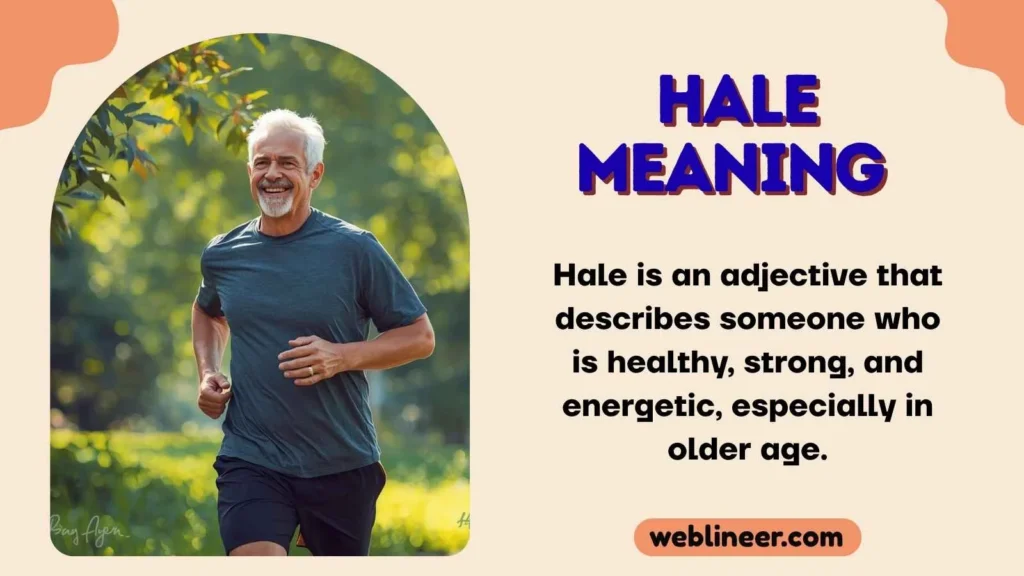
Hale is an adjective that describes someone who is healthy, strong, and energetic, especially in older age.
Quick Answer
Hale means strong, healthy, and full of vitality—often used to describe older adults who remain physically fit and active.
Origin of the Word
The word hale comes from Old English:
- Word: hāl
- Meaning: whole, healthy, uninjured
- Time period: Before the 12th century
Interestingly, it shares roots with the word whole, which also suggests completeness and wellness.
How the Meaning Has Evolved
Originally, hale simply meant “healthy.” Over time, the meaning became more specific. Today, it usually implies:
- Good physical strength
- Energy despite age
- Overall vitality
That’s why you often hear the phrase:
“Hale and hearty.”
Pronunciation Guide
Hale is pronounced:
/heɪl/
Rhymes with:
- Sale
- Tail
How to Use “Hale” Correctly in Texts & Chat
The word hale is not slang, but it appears frequently in everyday conversation, especially when discussing health and aging.
Tone and Context
Common tones:
- Respectful
- Positive
- Descriptive
- Slightly formal
Example tone:
Warm admiration for someone’s health.
Platform-Specific Usage
SMS / WhatsApp
“My grandma is still hale and active at 90.”
Instagram Caption
“Celebrating Dad turning 80 and still hale and hearty!”
Twitter / X
“Doctors say he remains hale after surgery.”
Workplace Chat
“The patient is hale and recovering well.”
Reddit / Forums
“My grandfather is surprisingly hale for his age.”
When to Use It
Use hale when describing:
- Older adults in good health
- Recovery from illness
- Physical strength and vitality
When NOT to Use It
Avoid using hale:
- In casual slang jokes
- To describe temporary health
- For young children
- In highly technical medical writing
Formatting Tips
Capitalization:
- Usually lowercase: hale
- Capitalized only at sentence start
Common pairing:
hale and hearty
Real Conversation Examples Using “Hale”
Between Friends
A: “How’s your grandfather doing?”
B: “He’s still hale and goes for walks every morning.”
Meaning:
Shows admiration for continued health and independence.
In a Family Chat
Mom: “Your uncle just turned 75.”
Son: “Wow, he’s still hale and working every day.”
Meaning:
Highlights strength and active lifestyle.
At Work
Manager: “Is Mr. Khan ready to return to work?”
HR: “Yes, the doctor says he’s hale and fully recovered.”
Meaning:
Indicates successful recovery.
In a Medical Context
Doctor: “Despite his age, he remains hale and stable.”
Meaning:
Professional reassurance about health.
In a Social Media Post
“Grandma just celebrated her 92nd birthday—still hale and gardening daily.”
Meaning:
Celebrates longevity and vitality.
Common Mistakes & Misunderstandings
1. Confusing “Hale” with “Hail”
These words sound the same but mean different things.
Hale — healthy and strong
Hail — frozen rain or to greet enthusiastically
Example mistake:
Incorrect:
“He is hail and hearty.”
Correct:
“He is hale and hearty.”
2. Using “Hale” for Young People
While not wrong, it sounds unusual.
Less natural:
“The baby is hale.”
More natural:
“The baby is healthy.”
3. Assuming It Means Perfect Health
Hale suggests good health—not perfection.
Someone can be hale even with minor health conditions.
Generational Differences
Older generations use hale more often in:
- News articles
- Formal speech
- Medical discussions
Younger people understand it but may use simpler words like:
- Healthy
- Fit
- Strong
“Hale” Across Different Platforms & Demographics
Gen Z
Usage level: Low to moderate
They understand the word but rarely use it casually. Instead, they prefer:
- Fit
- Active
- Doing great
Millennials
Usage level: Moderate
Often used when talking about parents or grandparents.
Example:
“My dad is still hale at 70.”
Older Generations
Usage level: High
Common in:
- Newspapers
- Formal speech
- Medical updates
Social Media Trends
The phrase “hale and hearty” frequently appears in:
- Birthday posts
- Health updates
- Retirement celebrations
It’s considered:
Informal but respectful
And generally:
Safe for work
Related Slang, Abbreviations & Alternatives
| Term | Meaning | Tone |
|---|---|---|
| Healthy | Free from illness | Neutral |
| Fit | Physically strong | Casual |
| Robust | Strong and energetic | Formal |
| Vigorous | Full of energy | Formal |
| Active | Regularly moving or exercising | Neutral |
| Strong | Physically powerful | Neutral |
| Hardy | Tough and resilient | Slightly formal |
| Well | In good health | Casual |
| Thriving | Doing very well | Positive |
| Energetic | Full of energy | Neutral |
Synonyms
- Healthy
- Strong
- Robust
- Vigorous
Antonyms
- Weak
- Frail
- Sick
- Unwell
FAQs
What does hale mean in English?
Hale means healthy, strong, and full of energy. It is most often used to describe older adults who remain physically active and in good condition.
What is the meaning of hale and hearty?
Hale and hearty means someone is energetic, robust, and in excellent health, especially despite advanced age.
Is hale a formal word?
Yes, hale is slightly formal and traditional. It is commonly used in writing, news reports, and respectful conversation.
Can you use hale to describe yourself?
Yes, but it sounds more natural when describing someone older. For example:
“I feel hale and energetic today.”
Is hale meaning commonly used today?
Yes. While not trendy slang, hale remains widely used in everyday English, especially in phrases about health and aging.
Conclusion
The hale meaning is simple but powerful: strong, healthy, and full of life. It’s a word that carries respect, admiration, and a sense of vitality especially when describing older adults who remain active and energetic.
Even though it isn’t modern slang, hale continues to appear in conversations, social media posts, and news stories around the world. Knowing how to use it correctly helps you sound more confident and precise in English.
So next time you hear someone described as hale and hearty, you’ll know exactly what it means—and why it matters.

Hi, I’m Smith Roy, the writer of Weblineer.com, where I break down words, slang, and meanings into something you can actually understand without overthinking it.
I’ve always been curious about how language works, how a simple word can carry different meanings depending on context, culture, or even a trending moment online. That curiosity turned into Weblineer, a space where I simplify complex terms, decode internet slang, and explain meanings in a way that feels natural, clear, and useful.