Hypoglycemia meaning! You’re at work, school, or the gym and suddenly you feel shaky, sweaty, and oddly confused. Maybe your hands tremble, your heart races, or you feel light-headed for no clear reason.
Many people brush it off as stress or hunger. But sometimes, it’s something more specific.
That’s where understanding the hypoglycemia meaning becomes important.
Low blood sugar episodes can happen quickly and unexpectedly. They affect millions of people worldwide especially those living with diabetes but they can also occur in otherwise healthy individuals.
Recognizing the signs early can prevent serious complications and even save lives.
In this updated 2026 guide, you’ll learn:
- The simple definition of hypoglycemia
- Common symptoms and causes
- Real-life scenarios and warning signs
- When to seek medical help ⚠️
- How different age groups experience it
Let’s break it down in plain English.
What Does “Hypoglycemia” Mean?
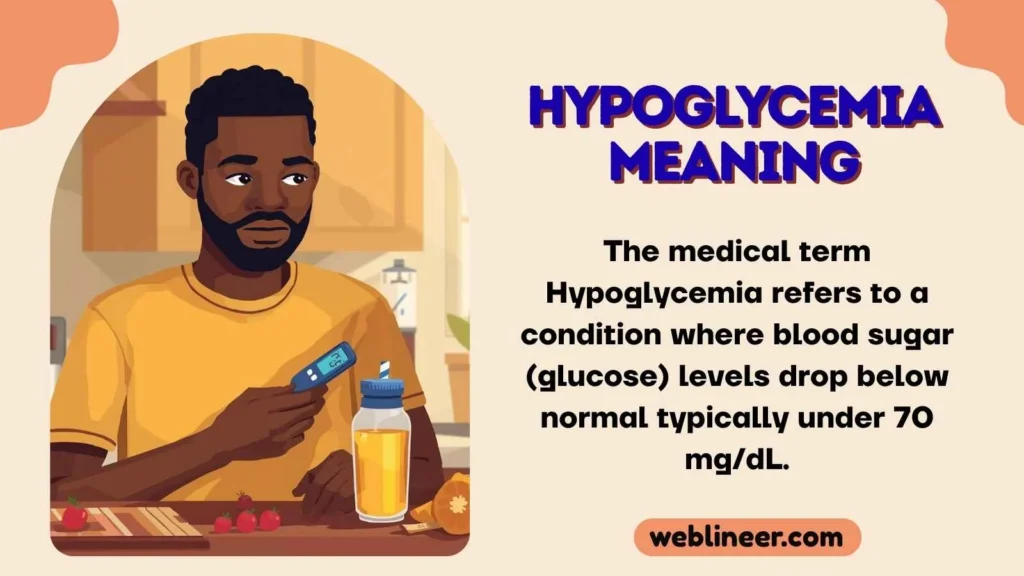
The medical term Hypoglycemia refers to a condition where blood sugar (glucose) levels drop below normal typically under 70 mg/dL.
Glucose is your body’s main energy source. When levels fall too low, your brain and muscles struggle to function properly.
Quick Answer
Hypoglycemia means low blood sugar when glucose levels fall below healthy levels and cause symptoms like shakiness, confusion, sweating, or weakness.
Word Origin (Etymology)
The term comes from Greek roots:
- Hypo = under or low
- Glyco = sugar
- Emia = condition of the blood
So literally, it means:
“Low sugar in the blood.”
When Did the Term Become Common?
The term became widely used in medicine in the early 20th century as doctors began treating diabetes with Insulin.
Today, organizations like the American Diabetes Association and World Health Organization use standardized thresholds to diagnose and manage the condition.
Pronunciation Guide
Hypoglycemia is pronounced:
hy-po-gly-SEE-mee-uh
How to Use “Hypoglycemia” Correctly in Texts & Conversations
Unlike slang, hypoglycemia is a medical term—but it still appears in everyday conversation, health apps, and social media posts.
Correct Context and Tone
The word is typically used in:
- Medical discussions
- Health education
- Emergency situations
- Diabetes management conversations
Tone is usually:
- Informational
- Serious
- Health-focused
Platform-Specific Usage
SMS or WhatsApp
- “I feel shaky—might be hypoglycemia. I need to eat.”
- “Reminder: Always carry snacks if you have hypoglycemia 🥤”
Discord / Gaming
- “BRB—low sugar episode.”
- “Does anyone else get hypoglycemia after intense workouts?”
When NOT to Use It
Avoid using the term casually or jokingly in:
- Professional meetings unrelated to health
- Formal documents without medical context
- Situations where symptoms are unclear
Instead, say:
- “I feel lightheaded”
- “My blood sugar might be low”
Formatting Tips
- Capitalization: Not required unless starting a sentence
- Abbreviation: Sometimes written as “hypo”
- Emoji pairing:
Common ones include:
- 🧃 juice
- 🍬 candy
- ⚠️ warning
Real Conversation Examples Using “Hypoglycemia”
Example 1 — Between Friends
Alex:
“I’m feeling shaky and dizzy.”
Jordan:
“Did you eat today? That sounds like hypoglycemia.”
Meaning:
Jordan recognizes classic low blood sugar symptoms.
Example 2 — In a Family Setting
Parent:
“Why is Grandma sweating so much?”
Nurse:
“She may be experiencing hypoglycemia. Let’s check her blood sugar.”
Meaning:
The term is used in a medical response situation.
Example 3 — At Work
Employee:
“I need a quick break—I’m having hypoglycemia symptoms.”
Manager:
“Go ahead. Let me know if you need help.”
Meaning:
The term communicates urgency without panic.
Example 4 — During Exercise
Trainer:
“You look pale. Are you okay?”
Client:
“I think it’s hypoglycemia—I skipped lunch.”
Meaning:
Physical activity can trigger low blood sugar.
Example 5 — In a Hospital
Doctor:
“Your blood glucose dropped overnight. It was hypoglycemia.”
Meaning:
Used as a clinical diagnosis.
Common Mistakes & Misunderstandings
1. Confusing Hypoglycemia With High Blood Sugar
Many people mix it up with Hyperglycemia.
Quick difference:
- Hypoglycemia = low blood sugar
- Hyperglycemia = high blood sugar
2. Assuming Only Diabetics Get It
While people with Diabetes mellitus are at higher risk, others can experience it due to:
- Skipped meals
- Alcohol use
- Hormonal disorders
- Certain medications
3. Ignoring Early Warning Signs
Common early symptoms include:
- Shaking
- Sweating
- Hunger
- Anxiety
- Headache
Ignoring them can lead to:
- Confusion
- Seizures
- Loss of consciousness
Generational Misunderstandings
Older adults
May attribute symptoms to aging.
Younger people
May assume it’s dehydration or stress.
Parents
Sometimes mistake symptoms for mood changes.
How to Clarify If Someone Doesn’t Understand
Say:
- “It means my blood sugar is too low.”
- “I need something sweet right now.”
Simple and direct.
Hypoglycemia Across Different Platforms & Demographics
Gen Z
Often uses shortened terms like:
- “Hypo”
- “Low sugar”
Common platforms:
- TikTok
- Snapchat
- Discord
Millennials
More likely to discuss:
- Fitness-related hypoglycemia
- Diet and intermittent fasting
Platforms:
Older Adults
More likely to encounter:
- Medication-related hypoglycemia
- Nighttime episodes
Settings:
- Home care
- Hospitals
Is It Formal or Informal?
Hypoglycemia is considered:
- Medical terminology
- Safe for professional use
- Not slang
Viral Awareness Moments
Public health campaigns and social media videos showing:
- Emergency response to low blood sugar
- “15-15 rule” education
have increased awareness globally.
Causes of Hypoglycemia
Understanding causes helps prevent episodes.
Most Common Causes
- Too much insulin
- Skipping meals
- Intense exercise
- Alcohol consumption
- Certain medications
Less Common Causes
- Hormone deficiencies
- Liver disease
- Kidney disorders
- Tumors affecting insulin production
Risk Factors
You may be more likely to experience hypoglycemia if you:
- Have diabetes
- Take insulin or glucose-lowering drugs
- Fast for long periods
- Drink alcohol without eating
Symptoms of Hypoglycemia
Symptoms often appear suddenly.
Early Symptoms
- Shaking
- Sweating
- Hunger
- Rapid heartbeat
- Anxiety
Moderate Symptoms
- Blurred vision
- Confusion
- Irritability
- Difficulty concentrating
Severe Symptoms ⚠️
- Seizures
- Loss of consciousness
- Coma
Seek emergency medical care immediately if these occur.
How Hypoglycemia Is Treated
Treatment depends on severity.
Mild Episodes
Common quick fixes:
- Fruit juice
- Glucose tablets
- Candy
Severe Episodes
Medical professionals may administer:
Glucagon
This medication rapidly raises blood sugar levels.
Prevention Tips
- Eat regular meals
- Monitor blood sugar
- Carry emergency snacks
- Follow medication instructions
Related Slang, Medical Terms & Alternatives
| Term | Meaning |
|---|---|
| Hypo | Short form of hypoglycemia |
| Low blood sugar | Common everyday phrase |
| Glucose | Sugar in the bloodstream |
| Insulin | Hormone that lowers blood sugar |
| Blood glucose | Medical term for blood sugar |
| Hyperglycemia | High blood sugar |
| Glycemic index | How food affects blood sugar |
| Diabetic episode | Blood sugar imbalance event |
| Sugar crash | Sudden drop in energy |
| Fasting hypoglycemia | Low sugar after not eating |
FAQs
What blood sugar level is considered hypoglycemia?
Most health organizations define hypoglycemia as a blood glucose level below 70 mg/dL. However, symptoms can vary depending on the individual. Some people may feel symptoms at slightly higher levels, especially if their blood sugar drops quickly.
Can hypoglycemia happen during sleep?
Yes. Nighttime hypoglycemia is common in people using insulin or diabetes medications. Symptoms may include sweating, nightmares, confusion, or waking with a headache. Continuous glucose monitors can help detect overnight drops.
Is hypoglycemia life-threatening?
Severe hypoglycemia can be dangerous if untreated. It may lead to seizures, unconsciousness, or brain injury. Quick treatment usually prevents complications, which is why recognizing early symptoms is critical.
How fast does hypoglycemia develop?
It can develop within minutes, especially after:
- Skipping meals
- Taking insulin
- Exercising intensely
Rapid onset is why carrying quick sugar sources is recommended.
Can stress cause hypoglycemia?
Stress itself doesn’t usually cause hypoglycemia directly. However, it can disrupt eating habits, sleep, and medication timing, which may indirectly lead to low blood sugar episodes.
Conclusion
Understanding the hypoglycemia meaning is more than learning a medical term—it’s about recognizing a real health risk that can affect daily life.
Low blood sugar can appear suddenly, but the signs are often clear if you know what to watch for. Shakiness, sweating, confusion, and hunger are your body’s early warning signals.
Learn them. Share them. Act quickly when needed.
If you or someone you know experiences frequent episodes, talk to a healthcare professional. Early awareness saves time, stress—and sometimes lives. 🩺
Explore more health terms, stay informed, and help others recognize the signs.

Hi, I’m Smith Roy, the writer of Weblineer.com, where I break down words, slang, and meanings into something you can actually understand without overthinking it.
I’ve always been curious about how language works, how a simple word can carry different meanings depending on context, culture, or even a trending moment online. That curiosity turned into Weblineer, a space where I simplify complex terms, decode internet slang, and explain meanings in a way that feels natural, clear, and useful.