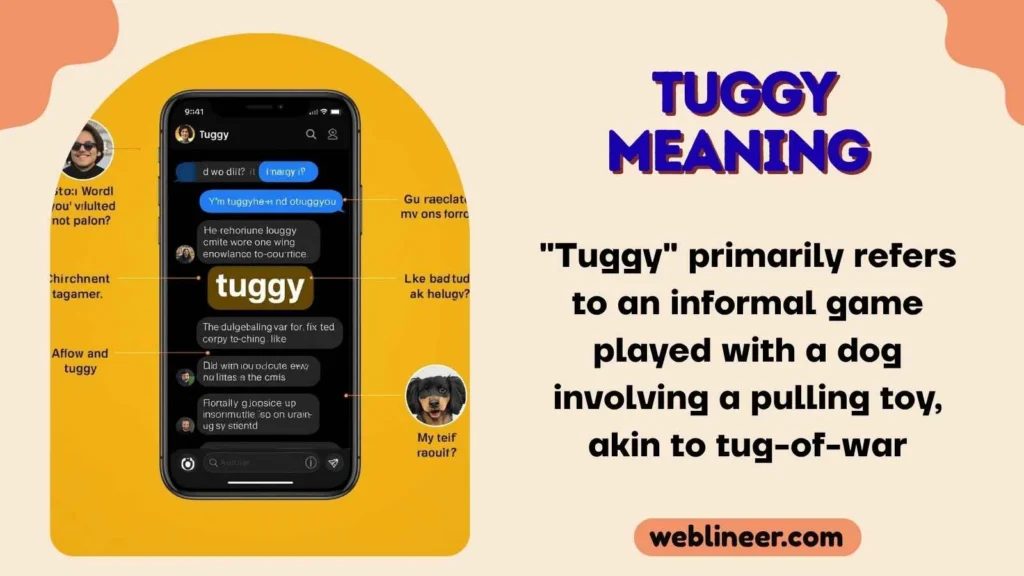
You’re scrolling through messages, gaming chat, or social media comments when someone drops the word “tuggy.”
You pause.
Is it a joke? A nickname? Something inappropriate?
That moment of confusion is exactly why understanding modern slang matters more than ever. Online language evolves fast, and a single word can carry very different meanings depending on context, age group, or platform.
The tuggy meaning isn’t one-size-fits-all. It can be playful, harmless, or sometimes awkwardly adult.
Knowing which is which helps you avoid misunderstandings, especially in group chats, family conversations, or professional spaces.
In this complete 2026 guide, you’ll learn:
- The exact definition and origin of “tuggy”
- How people actually use it in texts and chats
- Real conversation examples
- Common mistakes to avoid
- Related slang terms and alternatives
Let’s decode it.
What IS “Tuggy” meaning?
Simple Definition
Tuggy is informal slang derived from the word “tug.” It can mean:
- A playful pull or grab
- A cute or humorous nickname
- A crude slang reference to self-pleasure (adult context)
The intended meaning depends entirely on the situation and tone.
Pronunciation Guide
Tuggy is pronounced:
TUG-ee
(/ˈtʌɡ.i/)
Origin Story
The word comes from the verb “tug,” which means to pull something with force. Over time, English speakers added the “-y” ending to make it sound casual or playful—similar to words like:
- dog → doggy
- hug → huggy
In online slang communities, especially forums and messaging apps, the term gradually picked up additional meanings, including humorous and adult interpretations.
How the Meaning Evolved
Early usage:
Simple, literal meaning — a small pull.
Mid-stage slang:
Playful nickname or teasing term.
Modern internet slang:
Sometimes used as crude humor in private chats.
Quick Answer:
Tuggy is informal slang that usually refers to a playful tug or nickname, but in some contexts it can be a crude adult joke. Always check the tone and audience before using it.
How to Use “Tuggy” Correctly in Texts & Chat
Understanding context is everything.
Correct Context and Tone
“Tuggy” is typically:
- Casual
- Playful
- Humorous
- Informal
It is not formal language.
Platform-Specific Usage
SMS / WhatsApp
Often used jokingly between friends or partners.
Instagram / TikTok Comments
Usually playful or teasing.
Discord / Gaming Chats
Can be humorous or sarcastic.
Reddit
Meaning varies widely—sometimes harmless, sometimes adult humor.
Work Email
Never appropriate.
When to Use It
Use “tuggy” when:
- Talking with close friends
- Joking casually
- Using playful language
When NOT to Use It
Avoid “tuggy” in:
- Professional communication
- School assignments
- Formal conversations
- Mixed-age family chats
Formatting Tips
Most common styles:
- tuggy
- Tuggy
- tuggy 😂
- tuggy lol
Rare styles:
- TUGGY (can look aggressive)
- tuggy!!! (can seem childish)
Real Conversation Examples Using “Tuggy”
Example 1 — Between Friends
Alex: Stop giving my hoodie a tuggy!
Sam: I just wanted to see the logo 😂
Meaning:
Playful teasing about pulling clothing.
Example 2 — Dating Chat
Jamie: Come here, I need a huggy and a tuggy.
Taylor: You’re so needy lol
Meaning:
Affectionate, playful tone.
Example 3 — Family Setting
Mom: The puppy keeps doing a tuggy on my socks.
Dad: He’s training for a tug-of-war championship.
Meaning:
Literal pulling behavior.
Example 4 — Gaming Chat
Player1: Give the rope a quick tuggy when I say go.
Player2: Got it.
Meaning:
Instruction to pull something.
Example 5 — Adult Humor (Private Context)
Friend: He disappeared for a quick tuggy break.
Friend 2: Too much information, bro.
Meaning:
Crude joke about self-pleasure.
Common Mistakes & Misunderstandings
1. Assuming It Always Means Something Inappropriate
Not true.
In many situations, “tuggy” is completely harmless—especially when talking about pets, games, or playful actions.
2. Using It in Professional Settings
Big mistake.
Even if you mean it innocently, others may interpret it differently.
3. Misreading Tone in Text
Without voice or facial expression, tone is easy to misinterpret.
For example:
“I need a tuggy.”
This could sound:
- Cute
- Funny
- Awkward
- Inappropriate
Depending on context.
Generational Differences
Gen Z
More comfortable with playful slang.
Millennials
Use it casually but cautiously.
Older adults
May find it confusing or inappropriate.
Cultural Differences
In some regions, the word carries stronger adult connotations than in others.
Always consider your audience.
“Tuggy” Across Different Platforms & Demographics
Gen Z Usage
Gen Z tends to use “tuggy”:
- Humorously
- Ironically
- Casually
Often in memes or jokes.
Millennials
Millennials use it less frequently but recognize it from:
- Online forums
- Messaging apps
- Pop culture humor
Older Generations
Older users may:
- Misinterpret it
- Avoid using it
- Find it unfamiliar
Platform Trends
Most common platforms:
- TikTok comments
- Discord chats
- Private messaging apps
Less common platforms:
- Professional forums
Is It Safe for Work?
No.
Even when harmless, the word can be misunderstood.
Related Slang, Abbreviations & Alternatives
| Term | Meaning | Tone |
|---|---|---|
| Tug | To pull | Neutral |
| Yank | Quick pull | Casual |
| Grab | Take hold of | Neutral |
| Pull | Move toward you | Neutral |
| Huggy | Affectionate hug | Cute |
| Nudge | Gentle push | Friendly |
| Tease | Playful provocation | Casual |
| Joke | Humorous remark | Neutral |
| Messing around | Playing or joking | Casual |
| Goofing off | Being silly | Informal |
You can naturally replace “tuggy” with these terms when you want clearer communication.
FAQs
Is “tuggy” a slang word?
Yes. Tuggy is informal slang derived from the word “tug.” Its meaning varies based on context, ranging from playful pulling to humorous or adult references in casual conversation.
Does “tuggy” have a sexual meaning?
Sometimes. In certain informal or adult conversations, tuggy can be used as crude humor referring to self-pleasure. However, it does not always carry that meaning.
Can kids use the word “tuggy”?
Yes, in innocent contexts like games or pets. But adults should be aware that the word may have alternative meanings in different settings.
Is “tuggy” commonly used online?
It appears occasionally in chats, gaming communities, and social media comments, but it is not among the most common slang terms.
Should I avoid using “tuggy”?
Use it carefully. In casual settings with friends, it may be harmless. In professional or formal communication, it’s safer to choose clearer language.
Conclusion
Language on the internet changes fast. Words that seem simple can carry surprising meanings.
The tuggy meaning is a perfect example. Sometimes it’s playful. Sometimes it’s literal. Occasionally, it’s awkwardly adult. Context decides everything.
When in doubt, choose clarity. And if you do use slang, make sure your audience understands your tone.
Curious about more internet slang?
Drop your favorite text abbreviation in the comments below — and keep exploring modern digital language.

Hi, I’m Smith Roy, the writer of Weblineer.com, where I break down words, slang, and meanings into something you can actually understand without overthinking it.
I’ve always been curious about how language works, how a simple word can carry different meanings depending on context, culture, or even a trending moment online. That curiosity turned into Weblineer, a space where I simplify complex terms, decode internet slang, and explain meanings in a way that feels natural, clear, and useful.