Ever seen someone type “he was dwerking 😂” and paused for a second thinking… wait, what does that even mean?
You’re not alone. Internet slang evolves fast, and dwerk meaning has quietly slipped into chats, memes, and social media captions. It sounds familiar kind of like “twerk” but it’s not exactly the same thing.
Understanding slang like this isn’t just about staying trendy. It helps you read tone correctly, avoid awkward misunderstandings, and even sound more natural in online conversations.
In this updated 2026 guide, you’ll learn exactly what “dwerk” means, where it came from, how to use it properly, and see real-life examples you can relate to. Let’s break it down.
What Does “Dwerk” Mean?
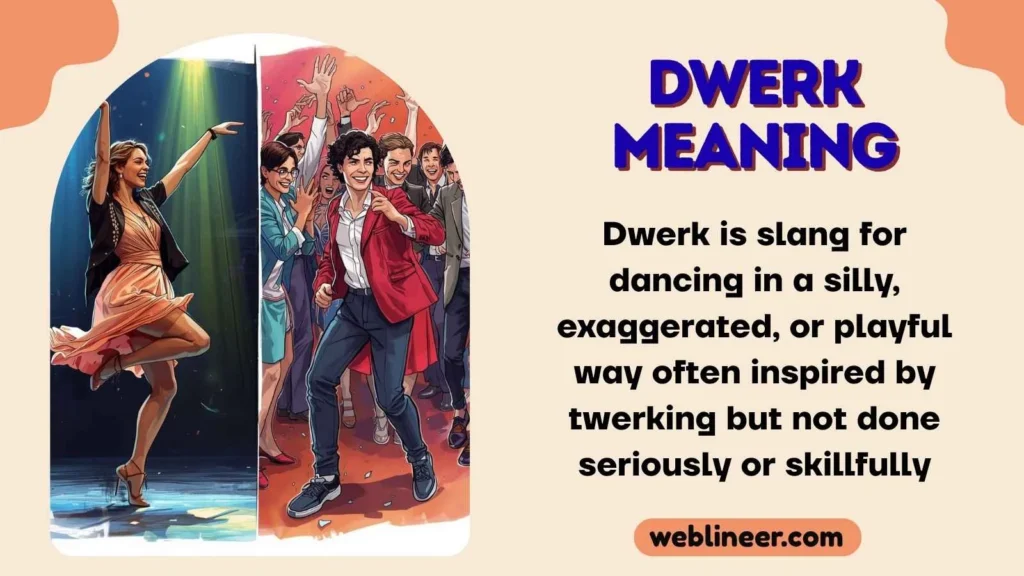
Dwerk is slang for dancing in a silly, exaggerated, or playful way often inspired by twerking but not done seriously or skillfully.
Quick Answer:
Dwerk means to dance in a goofy, exaggerated, or joking way, often mimicking twerking but not seriously.
Origin of the Term
“Dwerk” likely comes from a blend or playful twist on the word “twerk.” As twerking became globally popular in the early 2010s, internet users began creating humorous variations.
“Dwerk” emerged as:
- A meme-style word
- A joking way to describe bad or funny dancing
- A casual slang term used in chats and captions
It gained traction on platforms like:
- TikTok comments
- Instagram reels
- Discord and gaming chats
How the Meaning Evolved
At first, it was just a joke. Now, it’s commonly used to:
- Tease someone’s dancing (in a friendly way)
- Describe intentionally goofy moves
- Add humor to social posts
Pronunciation
It’s pronounced like:
/dwurk/ (rhymes with “work”)
How to Use “Dwerk” Correctly in Texts & Chat
Using “dwerk” is easy—but tone matters.
✅ When to Use It
Use “dwerk” when:
- You’re joking about dancing
- Someone is dancing badly (in a funny way)
- You want to exaggerate humor
Examples:
- “Bro was dwerking at the wedding 💀”
- “I tried to dance but ended up dwerking 😂”
❌ When NOT to Use It
Avoid using “dwerk”:
- In professional emails
- In formal writing
- With people unfamiliar with slang
Platform-Specific Usage
- WhatsApp/SMS: Casual chats with friends
- Instagram: Funny captions or reels
- TikTok: Comments on dance videos
- Discord: Gaming banter
- X (Twitter): Meme-style humor
Formatting Tips
- Lowercase is standard: dwerk
- Often paired with emojis: 😂💀🔥
- No need for punctuation—keep it casual
Real Conversation Examples Using “Dwerk”
1. Between Friends
A: Did you see Ali at the party?
B: Yeah bro started dwerking out of nowhere 😂
👉 Meaning: Funny, unexpected dancing.
2. In a Group Chat
Friend 1: I’m bringing dance moves tonight
Friend 2: Not your dwerking again 💀
👉 Meaning: Playful teasing.
3. Dating Scenario
Her: You dance?
Him: Only professional dwerking 😎
👉 Meaning: Self-deprecating humor.
4. Family Context
Sister: Dad was dancing at the wedding
You: Please tell me he wasn’t dwerking 😭
👉 Meaning: Imagining awkward dancing.
5. Gaming Chat
Player 1: Why is your character moving like that?
Player 2: Chill I’m just dwerking on them 😂
👉 Meaning: Mocking funny in-game movement.
Common Mistakes & Misunderstandings
1. Confusing It with “Twerk”
Not the same thing.
- Twerk: Actual dance style
- Dwerk: Funny or exaggerated dancing
2. Taking It Too Seriously
If someone says “you’re dwerking,” they’re usually joking—not criticizing harshly.
3. Generational Confusion
- Gen Z: Gets it instantly
- Millennials: Might guess correctly
- Older users: Often confused
4. Cultural Differences
In some regions, it might not be recognized at all—so context matters.
“Dwerk” Across Different Platforms & Demographics
Gen Z vs Millennials
- Gen Z: Uses it casually in memes and chats
- Millennials: Use it occasionally, often humorously
Where It’s Most Popular
- TikTok comment sections
- Instagram reels
- Discord servers
Is It Safe for Work?
Not really.
While it’s not offensive, it’s:
- Informal
- Slightly meme-based
- Not suitable for professional communication
Viral Influence
The word grew through:
- Meme culture
- Dance videos
- Joke captions
No single viral moment—just steady internet evolution.
Related Slang, Abbreviations & Alternatives
Here are similar terms you might see:
| Term | Meaning |
|---|---|
| Twerk | A specific dance style |
| Bust a move | Dance energetically |
| Vibe | Enjoy the moment casually |
| Cringe | Embarrassing behavior |
| Goofy | Silly or playful |
| Lit | Exciting or fun |
| Slay | Perform exceptionally well |
| Meme dancing | Dancing for humor |
| LOL | Laughing out loud |
| ROFL | Rolling on the floor laughing |
👉 Learn more about related slang like “cringe meaning” or “slay meaning” for deeper context.
FAQs
What does dwerk mean in texting?
In texting, “dwerk” means dancing in a funny, exaggerated, or joking way. It’s often used to describe someone not taking dancing seriously.
Is dwerk a real word?
No, “dwerk” isn’t a formal dictionary word. It’s internet slang that developed through memes and casual online communication.
Can dwerk be offensive?
Generally, no. It’s playful and humorous. However, tone matters—context can change how it’s perceived.
Is dwerk popular in 2026?
Yes, it’s still used in meme culture and casual chats, especially among younger audiences and on social media platforms.
What’s the difference between dwerk and dancing?
“Dancing” is a general term, while “dwerk” specifically implies goofy, exaggerated, or humorous dancing—not serious performance.
Conclusion
So, what’s the bottom line?
Dwerk meaning is all about humor. It’s not serious dancing it’s playful, exaggerated, and often intentionally goofy. That’s exactly why people love using it.
It fits perfectly into today’s fast-moving meme culture. Whether you’re joking with friends or reacting to a funny video, “dwerk” adds personality and humor to your message.
Now that you know how to use it, you won’t be confused next time it pops up in your chat.
👉 Got a favorite slang word you want decoded next? Drop it in the comments and keep the conversation going.

Hi, I’m Smith Roy, the writer of Weblineer.com, where I break down words, slang, and meanings into something you can actually understand without overthinking it.
I’ve always been curious about how language works, how a simple word can carry different meanings depending on context, culture, or even a trending moment online. That curiosity turned into Weblineer, a space where I simplify complex terms, decode internet slang, and explain meanings in a way that feels natural, clear, and useful.