Ever seen someone post, “Still in my tusa meaning era 😭” after a breakup and wondered what that meant?
You’re not alone. Internet slang moves fast, and new expressions can feel confusing especially when they cross languages and cultures.
The tusa meaning has exploded in popularity thanks to social media, music, and global pop culture.
What started as a regional slang term is now used worldwide to describe heartbreak, emotional recovery, or lingering feelings after a relationship ends.
In this guide, you’ll learn:
- The exact definition of tusa
- Where the word came from
- How to use it naturally in chats and posts
- Real conversation examples
- Common mistakes people make
Whether you’re a student, parent, content creator, or just curious about modern slang, this article breaks it down in a simple, practical way.
What Does “TUSA” Mean?
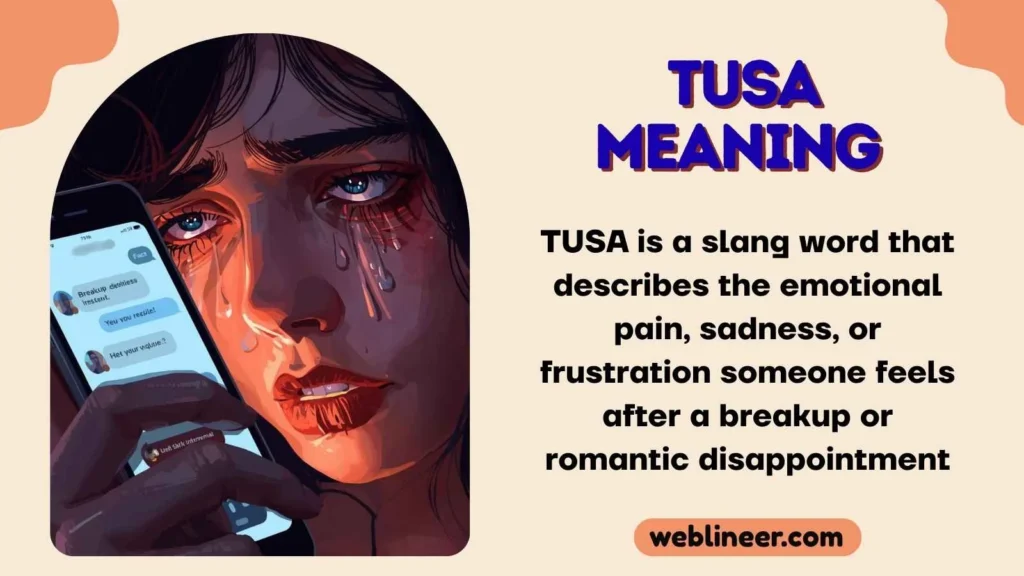
TUSA is a slang word that describes the emotional pain, sadness, or frustration someone feels after a breakup or romantic disappointment.
Quick Answer
TUSA means emotional heartbreak or lingering sadness after a romantic breakup.
It’s commonly used in Spanish-speaking communities and online conversations to describe feeling stuck in emotional recovery.
Origin of the Word
The term existed in Latin American slang before 2019, but it became globally famous after the hit song Tusa by:
- Karol G
- Nicki Minaj
The song tells the story of someone trying to move on after heartbreak while still secretly hurting—an emotional state many people recognize instantly.
Since then, the word has spread across:
- TikTok captions
- Instagram reels
- WhatsApp messages
- Meme culture
How the Meaning Evolved
Originally:
- Regional slang for heartbreak
Now:
- A widely recognized emotional state
- Sometimes used humorously or dramatically
- Often paired with memes or sad-love jokes
Pronunciation Guide
TUSA is pronounced:
TOO-sah
How to Use “TUSA” Correctly in Texts & Chat
Using tusa is simple once you understand the emotional tone behind it.
Correct Context and Tone
TUSA usually expresses:
- Heartbreak
- Emotional recovery
- Romantic disappointment
- Dramatic sadness (sometimes playful)
Tone examples:
- Emotional
- Humorous
- Dramatic
- Relatable
Platform-Specific Usage
WhatsApp / SMS
Used in casual conversations after relationship drama.
Example:
“I’m still in tusa after that breakup.”
Instagram / TikTok
Often appears in captions or hashtags.
Example:
“Entering my tusa era.”
Discord / Gaming Chats
Used jokingly when someone gets rejected.
Example:
“Bro got friend-zoned. Full tusa mode.”
Twitter / X
Used dramatically or humorously.
Example:
“Listening to sad songs because I’m in tusa.”
When NOT to Use It
Avoid using TUSA in:
- Job emails
- Academic writing
- Professional meetings
- Formal communication
Formatting Tips
Common ways people write it:
- tusa
- TUSA
- in my tusa era
- post-tusa recovery
Common emoji pairings:
😭
💔
🎶
🥲
Real Conversation Examples Using “TUSA”
Between Friends
Friend 1:
“I saw your ex with someone else.”
Friend 2:
“Don’t tell me that. I’m already in tusa.”
Meaning:
The person feels emotional pain after the breakup.
In a Group Chat
User:
“She didn’t reply to my message.”
Friend:
“Relax, don’t enter tusa mode yet.”
Meaning:
Playful warning about overreacting emotionally.
Dating Scenario
Person A:
“He stopped texting me.”
Person B:
“Welcome to the tusa club.”
Meaning:
Shared emotional disappointment.
Family Conversation
Sibling:
“Why are you listening to sad songs again?”
You:
“I’m still in tusa from last week.”
Meaning:
Lingering heartbreak after a breakup.
Gaming Chat
Player 1:
“I got rejected again.”
Player 2:
“Bro is permanently in tusa.”
Meaning:
Humorous teasing about romantic failure.
Common Mistakes & Misunderstandings
1. Thinking TUSA Means Just “Sad”
Not exactly.
TUSA specifically refers to romantic heartbreak, not general sadness.
Wrong:
“I’m in tusa because I failed my exam.”
Correct:
“I’m in tusa after my breakup.”
2. Assuming It’s Always Serious
Sometimes it’s used humorously.
Example:
“I’m in tusa because my pizza delivery was late.”
Here, it’s exaggeration for comedic effect.
3. Generational Confusion
Older generations may interpret the word literally or not recognize it at all.
Gen Z and Millennials typically understand it immediately because of social media exposure.
Cultural Differences
In Latin American communities, the term can feel more emotionally authentic.
In other regions, it may sound playful or trendy.
“TUSA” Across Different Platforms & Demographics
Gen Z
Most frequent users.
Common usage:
- TikTok captions
- Instagram stories
- Meme culture
Typical phrases:
- “Tusa era”
- “Healing from tusa”
- “Post-tusa glow-up”
Millennials
Use it less often but understand the meaning.
Often used humorously in conversations.
Older Adults
Recognition varies depending on exposure to music or social media.
Is TUSA Formal or Informal?
TUSA is:
- Informal
- Casual
- Social-media friendly
- Not workplace appropriate
Viral Popularity Moment
The global success of the song **Tusa turned the word into a mainstream cultural reference.
The track dominated charts and social media challenges, introducing the slang to millions worldwide.
Related Slang, Abbreviations & Alternatives
| Term | Meaning |
|---|---|
| Heartbroken | Feeling emotional pain after a breakup |
| Ghosted | Suddenly ignored by someone |
| Situationship | Undefined romantic relationship |
| Love-bombing | Excessive affection early in dating |
| Moving on | Recovering emotionally |
| Rebound | Dating someone quickly after breakup |
| Closure | Emotional resolution after relationship |
| Single era | Period of independence after breakup |
| Emotional damage | Dramatic sadness (often humorous) |
| Glow-up | Personal improvement after hardship |
FAQs
What does TUSA meaning in texting?
TUSA means emotional heartbreak or sadness after a romantic breakup. People use it in casual messages, memes, and social media posts to describe lingering feelings after a relationship ends.
Is TUSA a Spanish word?
Yes. TUSA originated in Latin American Spanish slang. However, its popularity spread globally through music and social media, so many English speakers now recognize and use it.
Why is the word TUSA so popular?
The word became globally famous after the 2019 hit song **Tusa, which described emotional recovery after heartbreak. Social media helped it spread quickly.
Can TUSA be used jokingly?
Yes. People often use TUSA humorously to exaggerate emotional disappointment, even in minor situations like being rejected or ignored.
Is TUSA appropriate for work messages?
No. TUSA is informal slang and should be used only in casual conversations, social media, or friendly chats.
Conclusion
The tusa meaning is simple but powerful: it describes the emotional aftermath of heartbreak the stage where feelings linger and healing begins.
What makes the word unique is how it traveled from regional slang to global internet language.
Music, memes, and social media turned it into a shared emotional shorthand that millions of people recognize instantly.
Now that you understand how to use it, you’ll spot it everywhere from TikTok captions to group chats. And next time someone says they’re “in tusa,” you’ll know exactly what they mean.
Drop your favorite text abbreviation in the comments below—and keep exploring modern slang.

Hi, I’m Smith Roy, the writer of Weblineer.com, where I break down words, slang, and meanings into something you can actually understand without overthinking it.
I’ve always been curious about how language works, how a simple word can carry different meanings depending on context, culture, or even a trending moment online. That curiosity turned into Weblineer, a space where I simplify complex terms, decode internet slang, and explain meanings in a way that feels natural, clear, and useful.